EHCP Application Process
Education, Health and Care Assessment Request
(EHCAR)
An EHCAR is the first step to applying for an EHCP. It is a needs assessment used to determine whether or not an EHC Plan is necessary to provide extra support for the child/ young person’s special educational needs.
EHCAR’s are usually only made when, following at least two cycles of the graduated approach (assess, plan, do, review), and progress is not being made. It would usually not be until this point that the setting commences discussions with parents or carers about the possible need for an EHCAR.
As well as educational settings, a request can also be made by anyone else who thinks an assessment may be necessary, including doctors, health visitors, teachers, parents/carers and even the young person themselves if aged between 16 and 25.
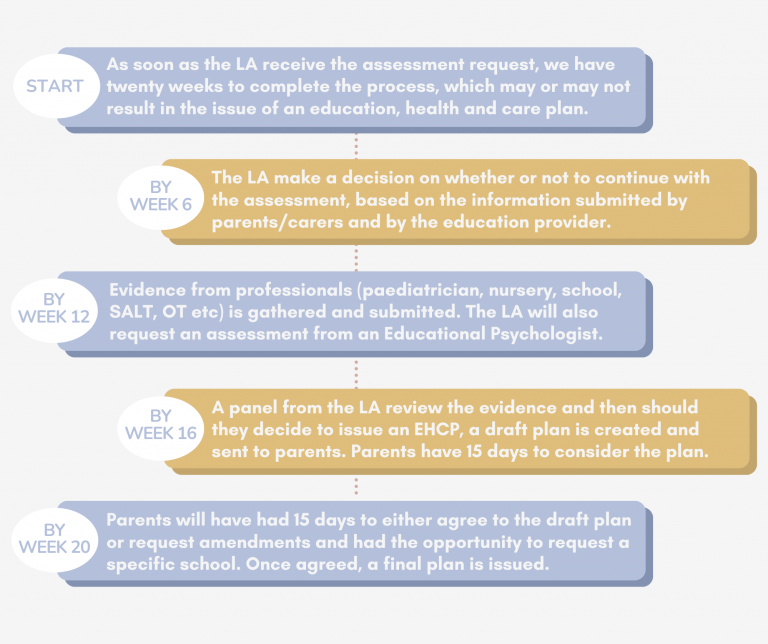
Timeline of EHCP Application
Disagreeing with a decision
You can challenge your local authority about:
- their decision to not carry out an assessment
- their decision to not create an EHC plan
- the special educational support in the EHC plan
- the school named in the EHC plan
If you cannot resolve the problem with your local authority, you can appeal to the Special Educational Needs and Disability (SEND) Tribunal.
Personal Budgets
You may be able to get a personal budget for your child if they have an EHC plan or have been told that they need one.
It allows you to have a say in how to spend the money on support for your child.
There are 3 ways you can use your personal budget. You can have:
- direct payments made into your account – you buy and manage services yourself
- an arrangement with your local authority or school where they hold the money for you but you still decide how to spend it (sometimes called ‘notional arrangements’)
- third-party arrangements – you choose someone else to manage the money for you
You can have a combination of all 3 options.

“Until you have a child with additional needs, you have no idea of the depth of your strength, tenacity and resourcefulness”
